In 1982, the United States Supreme Court had to decide whether a North Texas city could keep kids out of an arcade.
That is not a joke. The city of Mesquite passed an ordinance saying nobody under 17 could play a coin-operated amusement device without a parent or guardian standing there. It also let the police chief weigh whether an applicant had “connections with criminal elements” before the city would hand out a license. Aladdin’s Castle wanted to open inside Town East Mall. Mesquite said no. The fight went from a Dallas federal court to the Fifth Circuit to the Supreme Court, which handed down City of Mesquite v. Aladdin’s Castle, Inc. on February 23, 1982. Atari filed a brief. So did the Amusement Device Manufacturers Association.
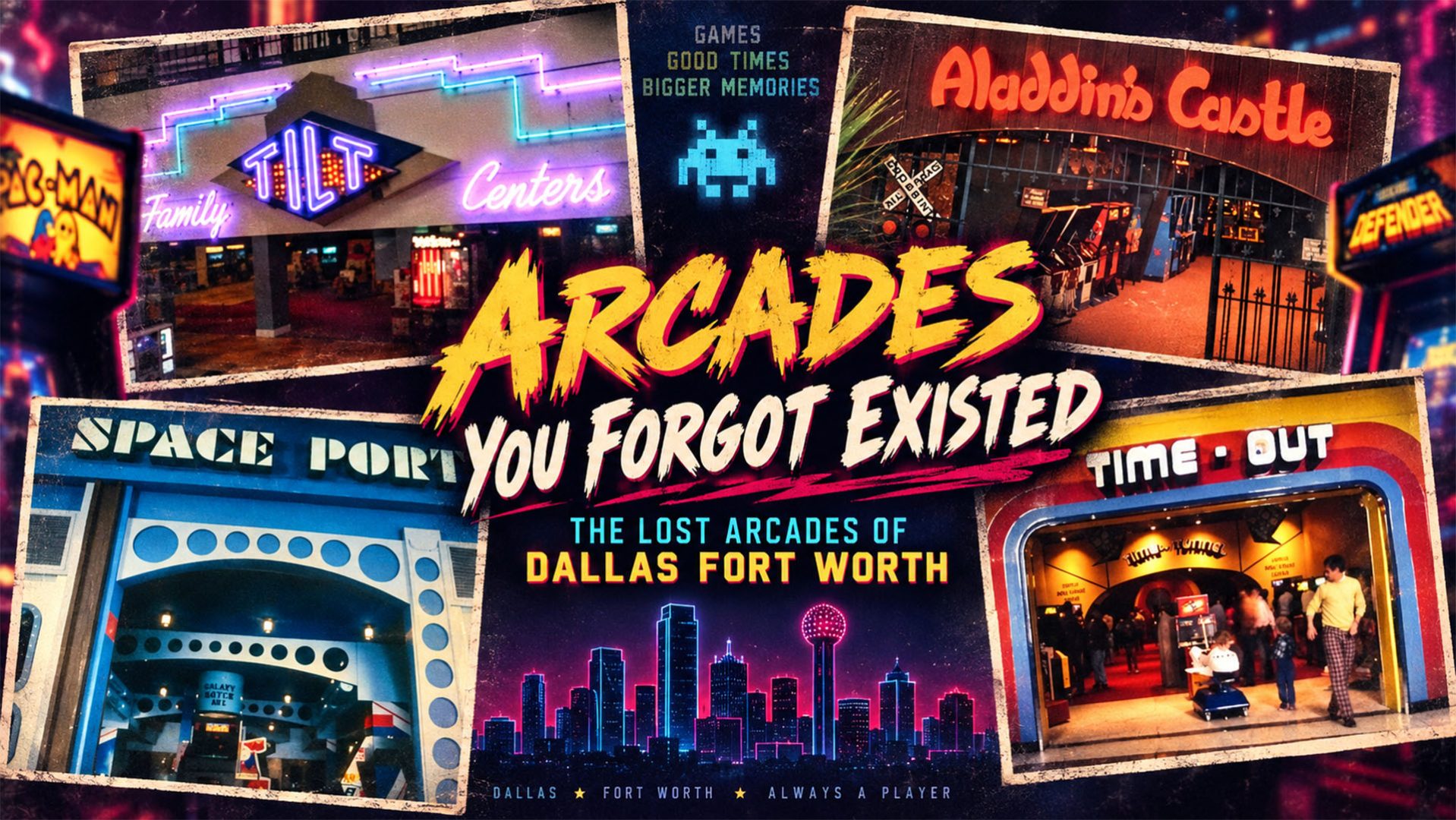
That is how seriously people took arcades around here. And almost none of those places are left.
Grab a Dr Pepper and let’s go digging.
Aladdin’s Castle: The One That Went to Washington
Before it was a Supreme Court case, Aladdin’s Castle was the biggest arcade chain in America. It started as American Amusements in the early ’70s, got bought by pinball maker Bally in 1974, and grew from 20 locations to around 450 at its peak in the early ’80s.
The whole business model was reassurance. Mall landlords were nervous about teenagers, so Aladdin’s Castle sold itself as the supervised version: bright carpet, real lighting, adult staff, posted rules against loitering. That pitch is exactly what Mesquite refused to buy.
The 1983 crash took out roughly 200 locations. Bally exited the business in 1989. Namco picked up the remains in the early ’90s and eventually stopped using the name at all.
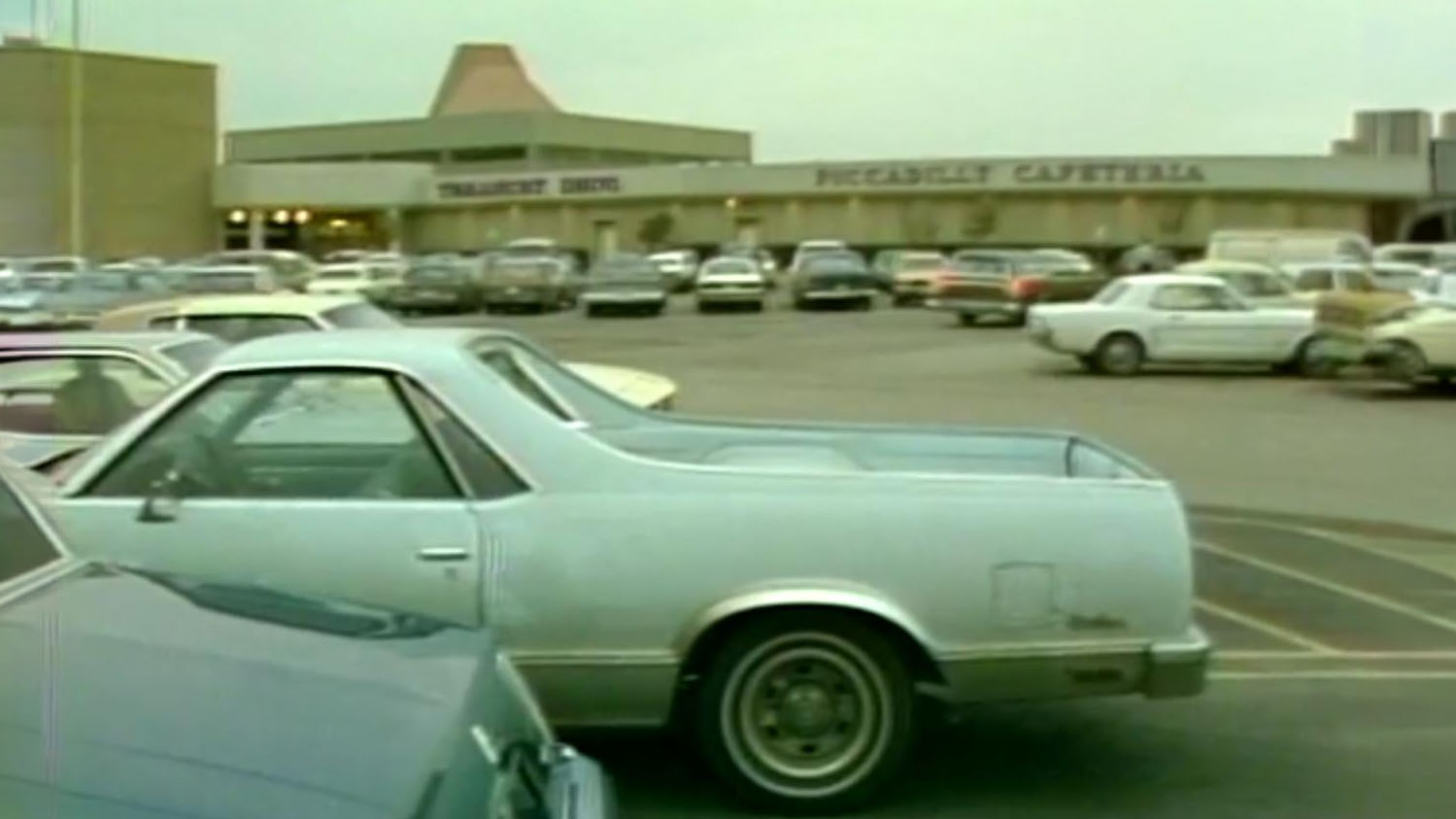
In DFW, the Aladdin’s Castle was located in Town East Mall.
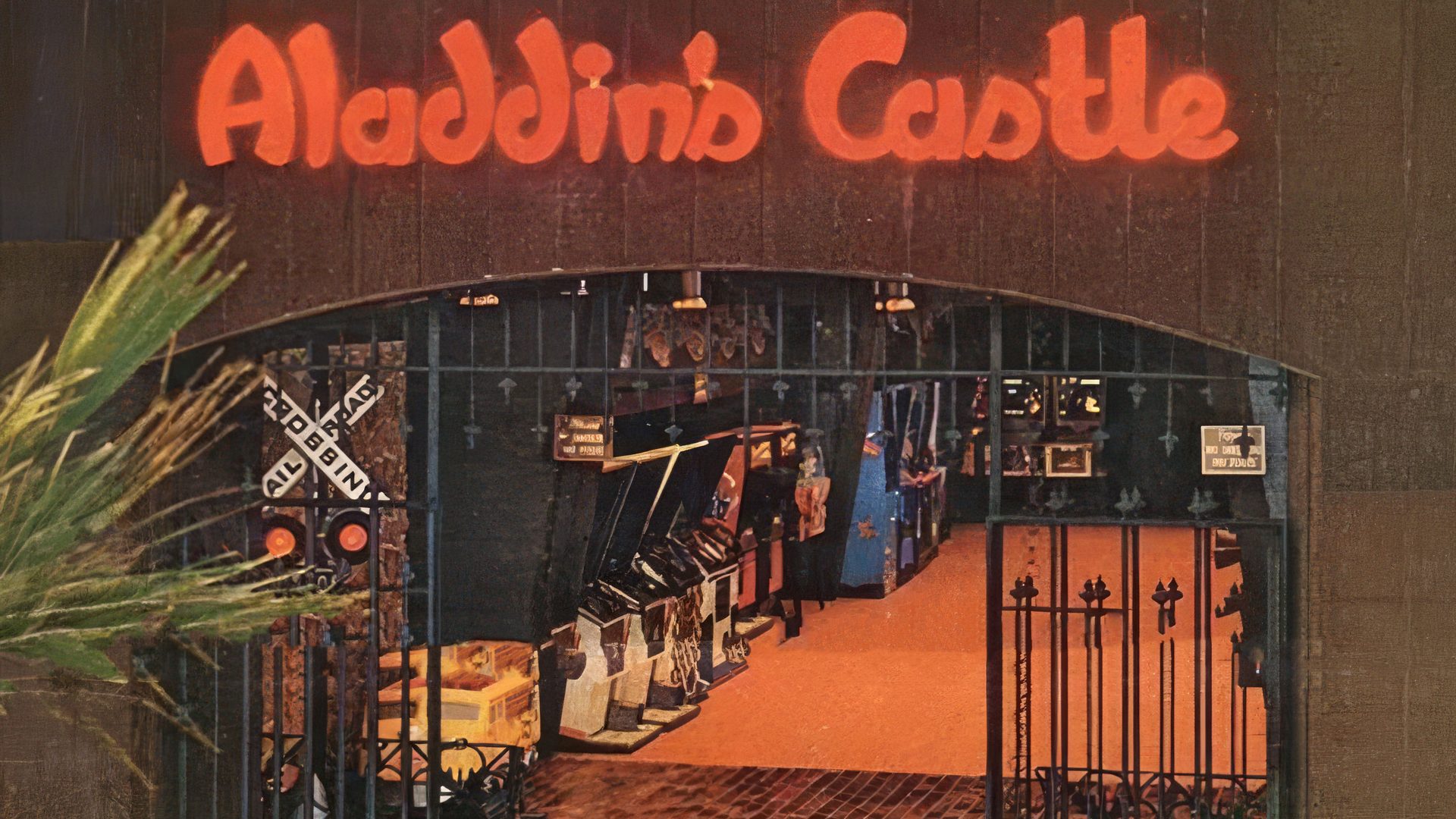
Space Port: NASA Jumpsuits at the Mall
Space Port leaned all the way into the theme. The interiors were built to look like the inside of a spacecraft, and the employees worked in jumpsuits modeled on NASA flight suits. There are corporate training videos floating around online where you can watch new hires get coached on how to keep the atmosphere “pleasant” and how to properly count out change.
It was owned by Edison Brothers, a St. Louis retail conglomerate that also owned Bakers, Wild Pair, and about two dozen other mall brands you walked past every weekend. Space Port was one of the three names that mattered in mall arcades, right alongside Aladdin’s Castle and Time-Out.
In DFW, the Space Port arcade was located in Ridgemar Mall.
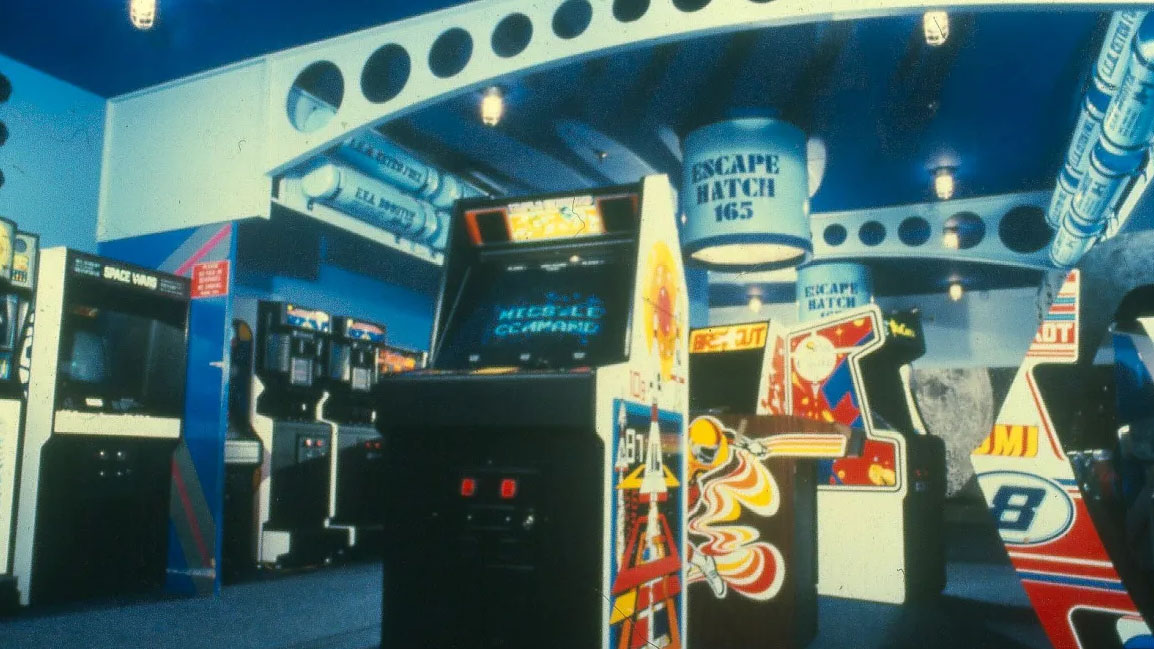
Time-Out: The Other Half of the Empire
Time-Out was Space Port’s stablemate under the same Edison Brothers roof, and between the two of them the company had a chain in seemingly every enclosed mall in the country. Edison also ran Exhilarama and Virtuality, which were early swings at VR that landed about 25 years too soon.
Then the retail side collapsed. Edison Brothers filed for bankruptcy in November 1995 and sold the entire entertainment division to Namco Cybertainment in 1996. Time-Out, Space Port, and Aladdin’s Castle all ended up owned by the same company, which is a tidy and slightly depressing ending for three brands that spent 15 years competing for your quarters.
We have to mention Time-Out, because of the connection, but sadly DFW never had one.
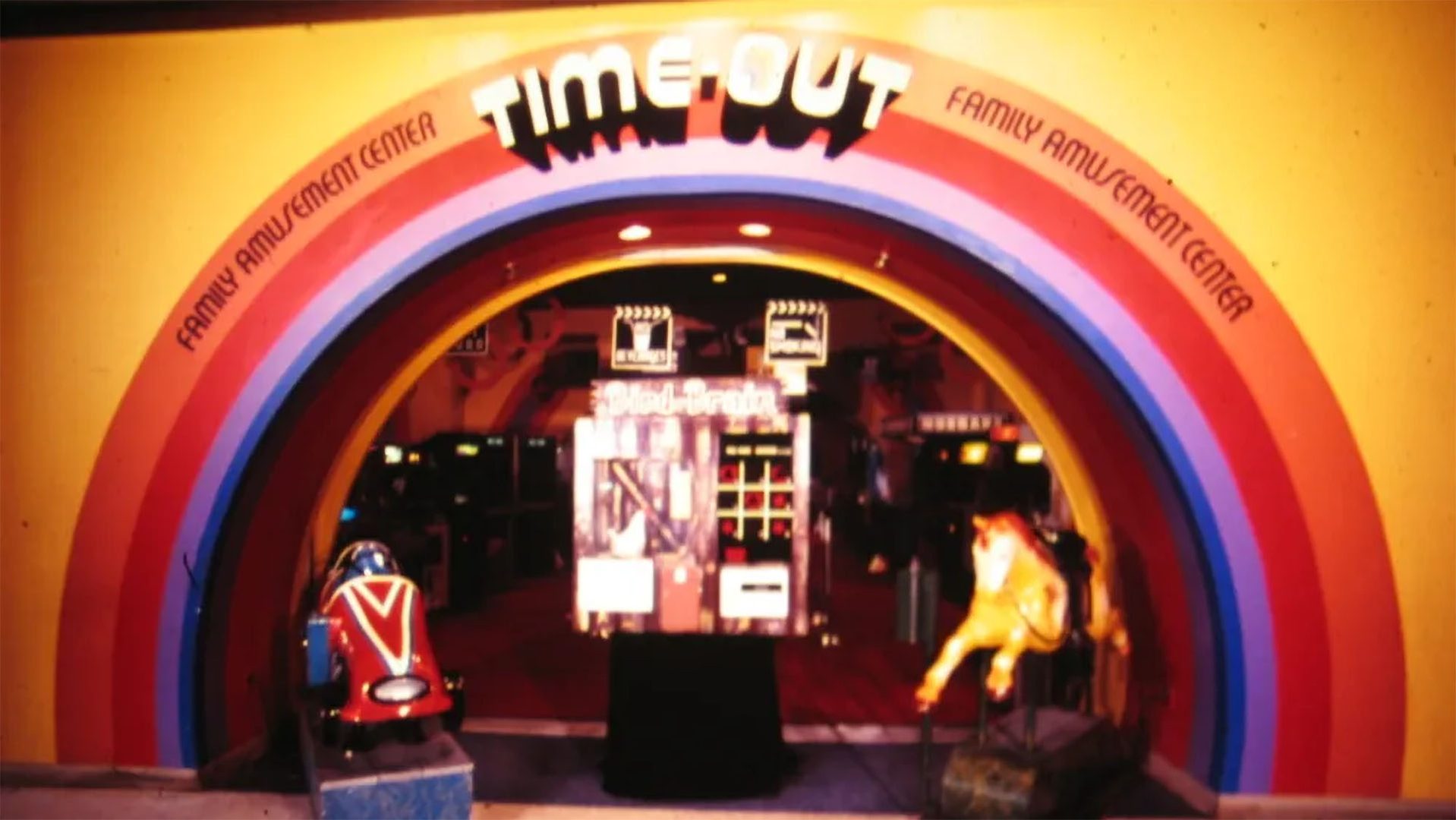
The Malls Took the Arcades With Them
Here is the part that stings for anyone who grew up in the Fort Worth Dallas metroplex. The arcades did not just close. The buildings around them got scraped off the map.
Forum 303, Arlington, home of the Forum Fair Arcade. It was dedicated September 19, 1970 at Pioneer Parkway and 360. It had an ice skating rink and a lower-level amphitheater where acts like Roy Clark played. It limped along as the Festival Marketplace flea market, closed in 2006, and got demolished in September 2007.
Six Flags Mall, Arlington, home of Tilt Arcade. It opened August 1970 as Arlington’s first enclosed mall and the largest shopping center in Tarrant County at the time. The Parks at Arlington opened in 1988 and started the bleeding. JCPenney left in 1997, Dillard’s and Sears both left in 2002, and the mall closed for good in February 2016.
North East Mall, Hurst, also a Tilt Arcade location, is the sole survivor. Opened March 1971 and it is still there, now the second largest indoor mall in Tarrant County. The stores changed, the food court changed, and the arcade quietly stopped being part of the deal. Sadly the Tilt closed long ago.
Mountasia: Gone, and Now It Is a Peppa Pig Park
While not strictly an arcade, two generations of Mid-Cities kids grew up at Mountasia on Boulevard 26. Mini golf, go-karts, bumper boats, batting cages, laser tag, and an arcade you retreated into when the Texas heat won.
Merlin Entertainment bought the 14-acre site and made it into what is is now the Peppa Pig Theme Park Dallas-Fort Worth. Merlin broke ground on a $26 million build and opened in 2024. It’s not the same, but at least it survives in some form.
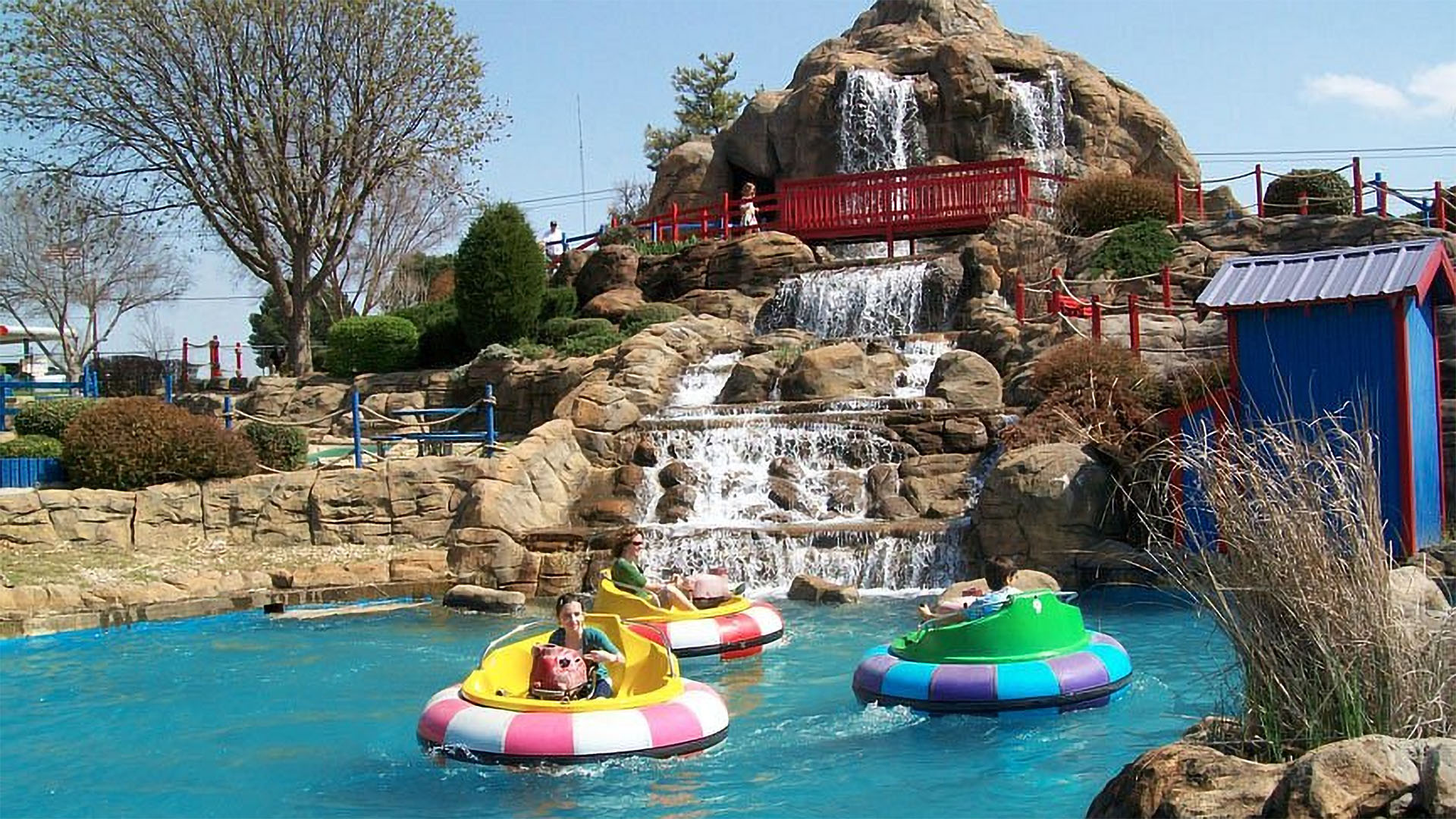
SpeedZone Dallas: The Last Big Track
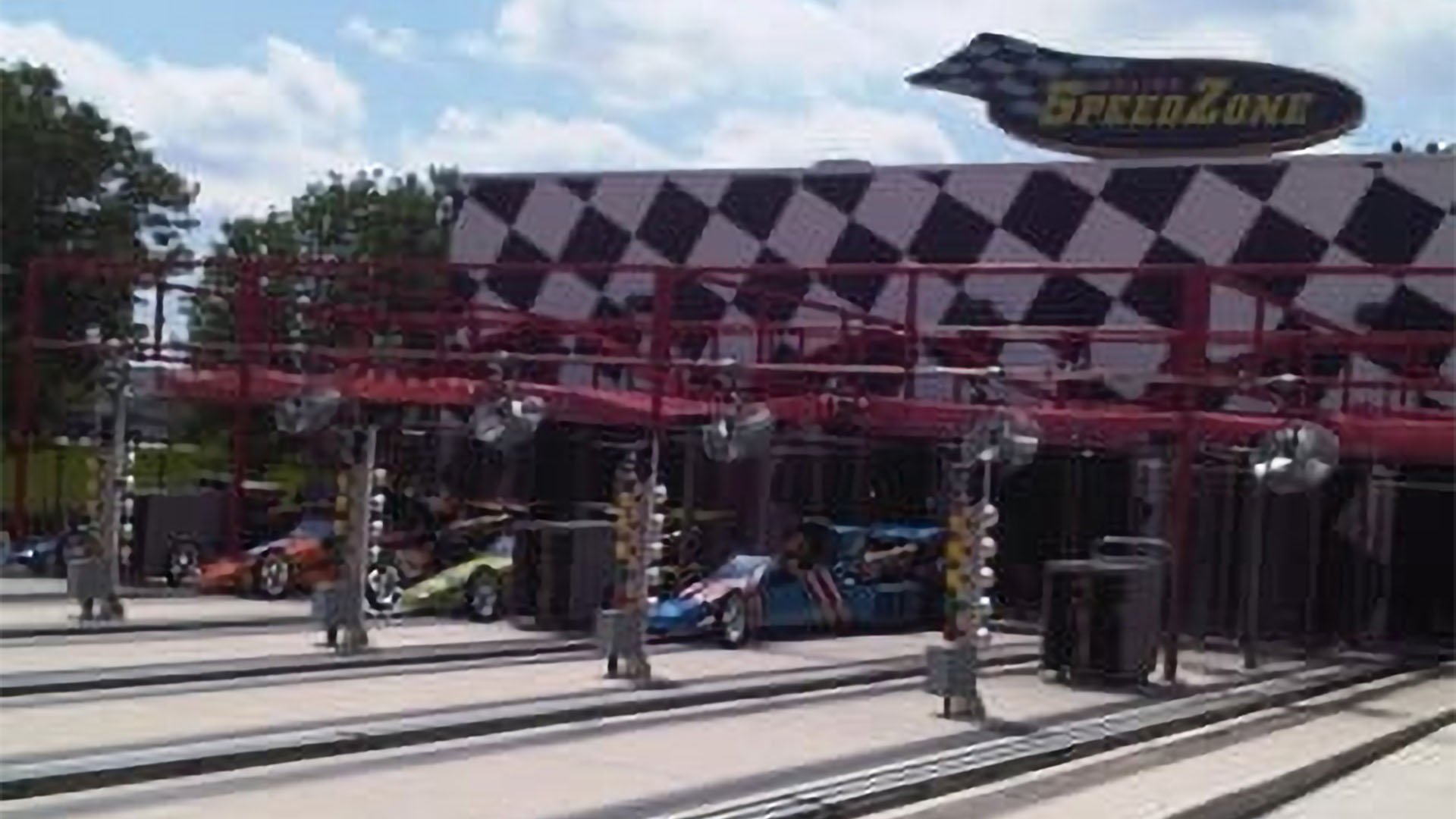
Out on Stemmons at Walnut Lane sat 12 acres of go-kart tracks, mini golf, a full arcade, and Top Eliminator dragsters that would launch you down a real strip. It started life as a Malibu Grand Prix property before Palace Entertainment rebranded it.
SpeedZone Dallas closed permanently on February 18, 2020, with the operator citing years of declining performance. The land sold to an industrial developer the following year. Sadly, there is a business park there now.
Mr. Gatti’s Pizza
Not every DFW arcade was in a mall. For a lot of North Texas kids the first cabinet they ever touched was in a pizza buffet.
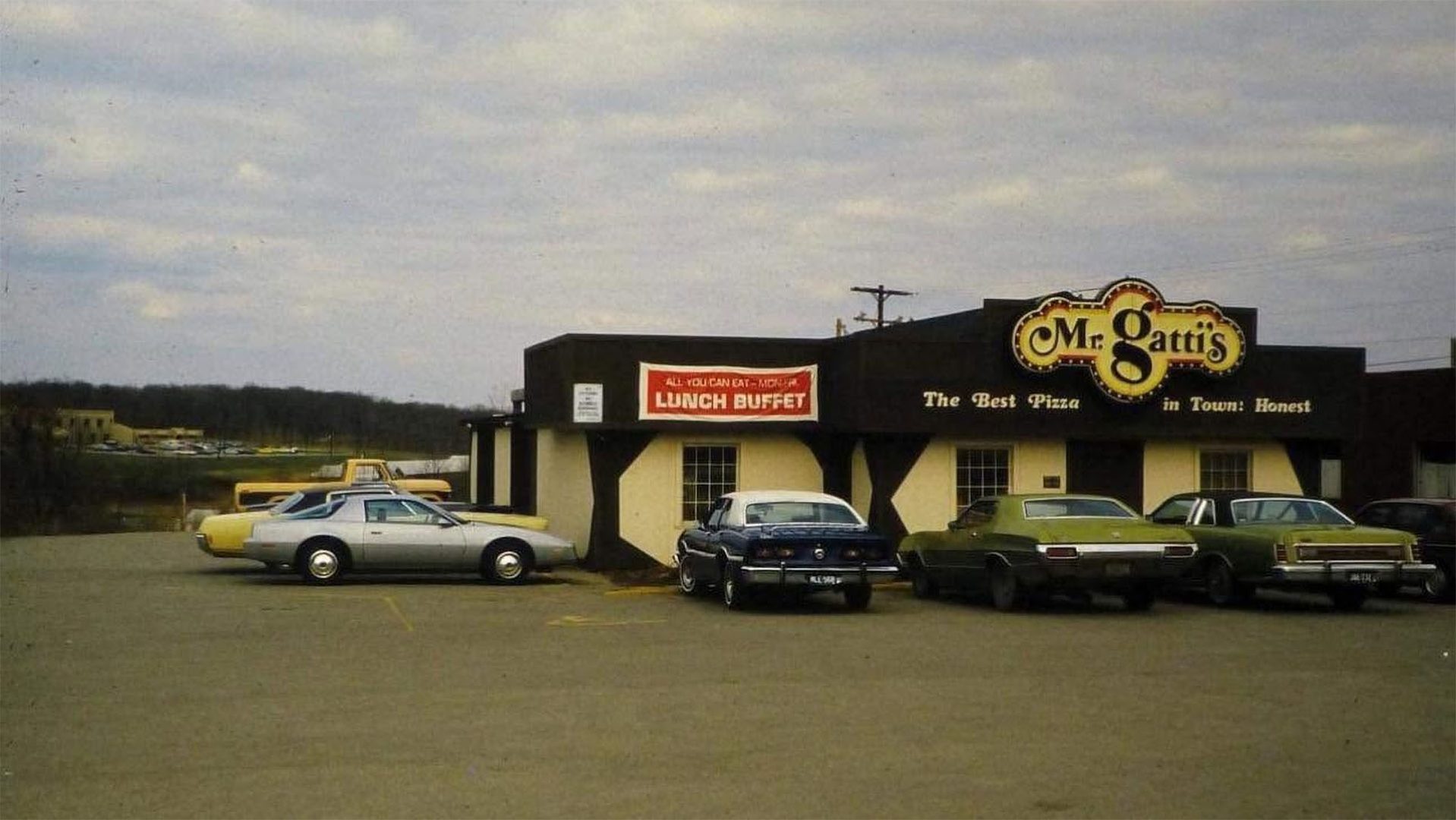
Mr. Gatti’s started in Stephenville in 1964, grew out of Austin, and is headquartered in Fort Worth today. It got into the games-plus-pizza business in the ’80s, and the formula was perfect: parents got a buffet and a salad bar, kids got a fistful of tokens and a dark room full of noise. Gatti’s filed Chapter 11 in 2019 and has since clawed its way back to more than 200 locations, though the newer Walmart-based stores skip the arcade entirely.
The DFW Arcade That Won
One local story ends differently. In December 1982, Dave Corriveau and Buster Corley took a 35,000 square foot Dallas warehouse, spent $3 million on it, and opened the first Dave & Buster’s. Games on one side, real food and drinks on the other.
It worked so well that Edison Brothers, the same company that owned Time-Out and Space Port, bought a majority stake in 1989 to fund the expansion. D&B outlasted its owner, outlasted its only real competitor, and is still headquartered in Dallas with more than 150 locations.
The mall arcades died. The one that grew up in a Dallas warehouse took over the country.
No Quarters Required in Bedford
We think about this history a lot, because we are ten minutes from where Mountasia used to be and a short drive from three malls that either no longer exist, or no longer have a classic arcade.
Time Rift Arcade is one flat $12 day pass, games on free play. Pinball, racers, fighters, claw machines, and pizza, right off Harwood Road in Bedford. Classic arcades that look new. Modern games that hit hard. Beer, wine, cider, and frozen margs for the level 21+ crowd.
If you spent your allowance at a mall arcade in Hurst, Euless, Arlington, or North Richland Hills, you already know what we are trying to keep alive.